
Online ordering
Most pizzas are ordered on a phone now. The question is not whether you should be online, but how much of each order you get to keep.
Foodora, Wolt and Uber Eats bring you new customers but take 15 to 30 percent of each order. Your own ordering page, for example through Lumit, costs almost nothing per sale and makes regulars belong to you. Often the best model is both: the apps for new customers, your own page for repeat orders.
How the apps work
You upload the menu and the app sends orders to a tablet in the kitchen. Either a courier or the customer picks up the food. You pay a share of every sale in fees. Easy to get started, but the fee never goes away.
- New customers find you without you doing anything
- The fee is 15 to 30% depending on the app and the deal, so negotiate
- The customer belongs to the app, not to you. Often you do not even get the phone number
- Do the maths: SEK 100,000 in app sales = SEK 20,000 to 30,000 in fees every month
Your own ordering page: keep the money and the customers
A page where customers order direct from you. No app fee per sale and the customer relationship stays yours. Put a note in every pizza box and point your Google profile there, and your own channel will grow every month.
- Almost the full pizza price stays with you
- You can see who the customers are and reward regulars
- Works for both collection and your own delivery
Our recommendation: run both
Be on one or two apps so people can find you and so you can win new customers. At the same time, keep your own ordering page and steer everyone who already likes you there. That way you pay fees for new customers, not for your regulars.
- New customers: the apps do the job
- Regulars: your own site, lower cost, your customers
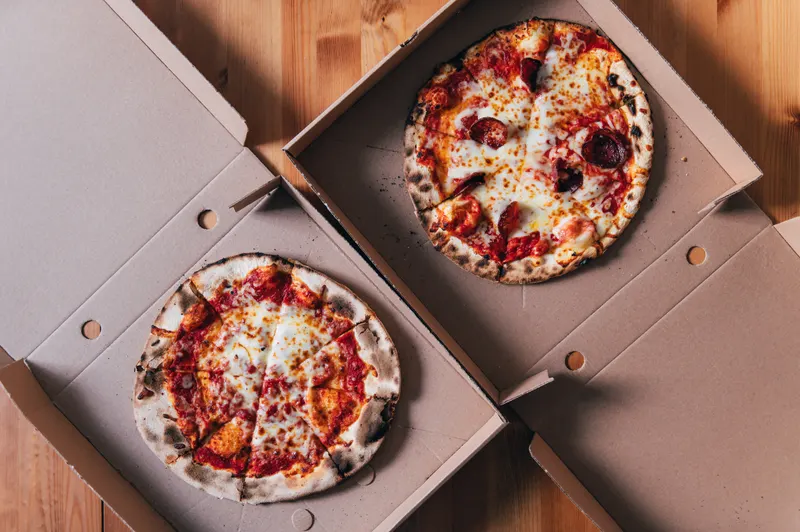
- A note in every app box: 'Next time, order direct from us'
- Raise prices 10 to 20% in the apps so the fee does not eat your margin
The apps and platforms
These are the biggest in Sweden. All of them take a slice of each order:
Foodora
Biggest in SwedenThe most users in many Swedish cities. The pink couriers are everywhere.
- Lots of customers right away
- Their own couriers, so you do not need any
- High fee per order
- The customer stays Foodora's customer
Wolt
Fast-growingStrong in larger cities and university towns. A slick app many customers like.
- Good app and support
- Reaches younger customers
- Fee on every purchase
- Not in every town yet
Uber Eats
Big cityStrongest in Stockholm, Gothenburg and Malmo. Tourists often already have the app on their phones.
- Strong reach in large cities
- Easy to get started with
- Weaker outside the big cities
- Same fee model as the others
Smaskigt
FreeA new Swedish service that is free for the restaurant. A young challenger worth testing when it is available in your town.
- No cost for the pizzeria
- Easy to test alongside the others
- New service, fewer users than the big players so far
Your own website as an alternative to the apps
If you want to avoid the fees and own your customers, this is the route:
Lumit
Our pickYour own ordering page with your name and your prices. Simple menu management for collection and delivery. The customers become yours, not the app's. Quick to launch.
- Much lower fees
- Your website and your brand
- The same prices as on your menu
- It can take time to move customers over to your own website
Common questions
Do I need to be on Foodora or Wolt?
No, but it is often smart at the start. The apps bring customers you would not reach yourself. The goal is to turn them into regulars who order direct from you later.
What does it cost to be on the apps?
Usually 15 to 30 percent of each order, sometimes plus a setup fee. Deals vary, so ask, compare and negotiate. A lot is negotiable.
Do I need my own drivers for my own ordering page?
No. Many places use their own page for collection only. The customer orders, pays and picks up. If you want to deliver yourself, set your own delivery area and fee.
How do I get customers to order direct instead of through the app?
Make it cheaper or better on your side: the same price as in the shop, a loyalty stamp card or a free dip. And tell people: a note in every box, a sign in the window, a link on Google. It takes a few months, then it starts to roll.